
The quiet power of a morning without your phone
Before the day becomes a stream of messages, headlines and other people's needs, there is a small window in which your attention can still belong to your own life.
There was a time when waking up did not immediately mean becoming reachable.
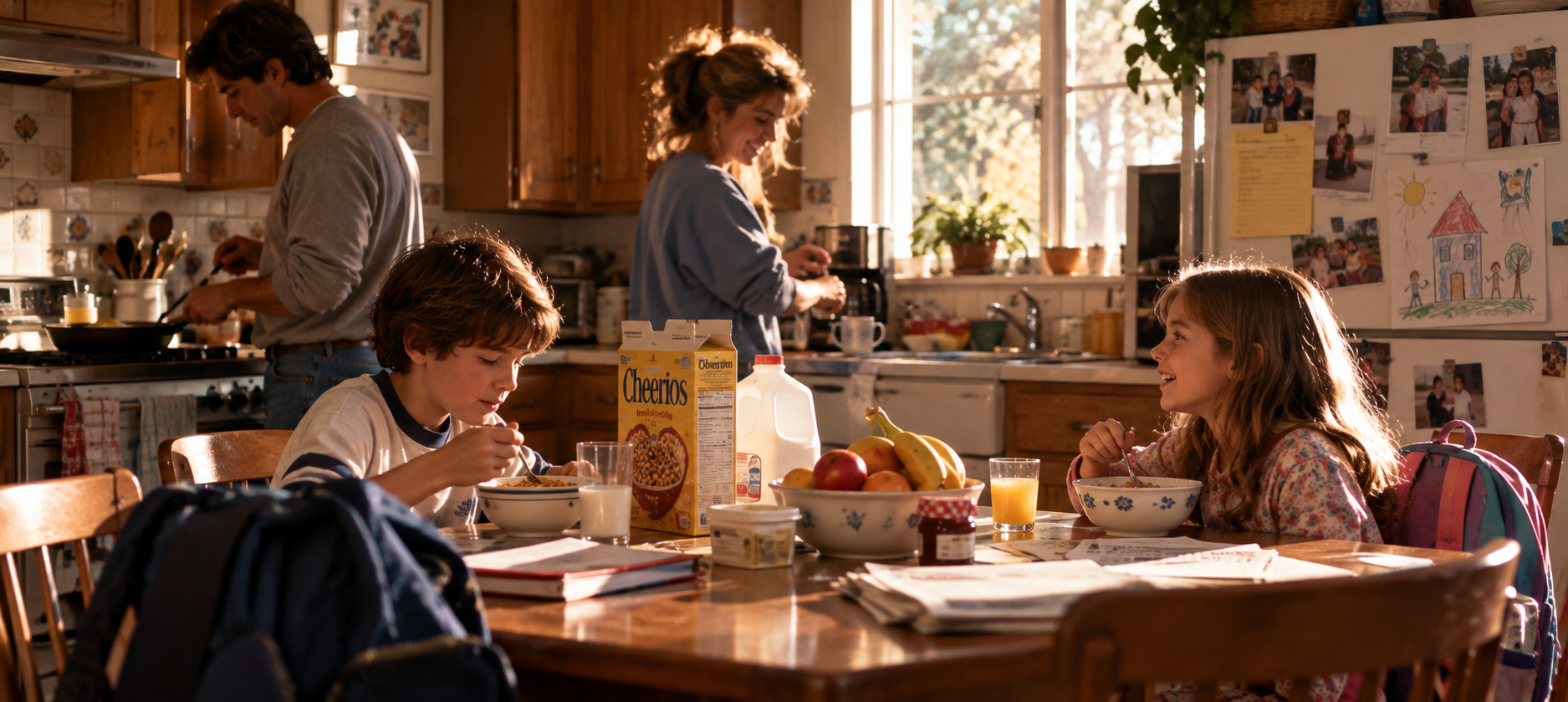
You might have walked into a kitchen still half asleep. Someone was looking for a backpack. Cereal was being poured. A parent was making breakfast. The radio might have been on in the background. There was plenty of chaos, of course. But there were also ordinary stretches of time in which nothing new was arriving in your hand every few seconds.
We do not need to romanticize that era to notice what has changed. Today, many of us can enter the entire world before we have fully entered our own morning.
Hubo una época en la que despertar no significaba volverse disponible de inmediato.
Tal vez entrabas a la cocina todavía medio dormido. Alguien buscaba una mochila. Se servía cereal. Uno de tus padres preparaba el desayuno. Quizás la radio sonaba de fondo. Claro que también había caos. Pero existían momentos cotidianos en los que nada nuevo llegaba a tu mano cada pocos segundos.
No necesitamos idealizar esa época para notar lo que cambió. Hoy muchos podemos entrar al mundo entero antes de haber entrado por completo en nuestra propia mañana.
The world can arrive before you do
The phone on the nightstand is remarkable precisely because it can contain so much: family, work, weather, news, entertainment, directions, photographs, emergencies, jokes, bills, school notices and people we love. The problem is not that any of those things exist there. It is the speed with which they can become the first atmosphere of the day.
You open one message and remember something you forgot yesterday. A headline makes your chest tighten. A work notification gives you a problem that technically belongs to 9:00 a.m. A photograph invites comparison before you have even looked at your own face in the mirror.
Within minutes, your attention has been divided among places, people and concerns that are nowhere near the room you are actually standing in.
Attention has a morning texture
The first minutes after waking are not magical, and there is no scientific rule that says you must spend them in perfect silence. But mornings do have a particular quality. You are crossing from sleep into activity. Your body is orienting to light, movement, hunger, temperature and the demands ahead.
What you place into that transition matters because attention tends to gather momentum. If the first thing you practice is checking, scanning and responding, the day can begin with the feeling that something is already waiting for you.
A phone-free morning interrupts that sequence. Not because quiet is morally superior to technology, but because it gives your own senses a chance to speak first.
You do not have to reject the world. You can simply let yourself arrive before inviting all of it in.
What we lost was not just boredom
It is easy to remember pre-smartphone mornings as quaint: newspapers, cereal boxes, car radios, people staring out windows. But what those moments often contained was something we now have to create intentionally — unfilled space.
A child waiting for the school bus might notice the weather. A parent making eggs might mentally wander through the day ahead. Someone eating breakfast alone might sit for three minutes without consuming anything except breakfast.
Those pauses were not necessarily mindful. People worried, rushed, argued and got distracted then too. But the environment did not offer an infinite stream of novelty every time discomfort, boredom or silence appeared.
That difference matters. Small empty spaces give thoughts time to finish. They let feelings become noticeable. They allow conversation to begin without competing with a screen. Sometimes they simply let a morning feel like a morning rather than the opening page of an information feed.
You may notice the urge before you notice the choice
Try leaving your phone alone for the first twenty minutes tomorrow and you may discover something revealing: your hand reaches for it before you have consciously decided that you want it.
That is not a character flaw. Repeated behaviors become efficient. The brain learns the sequence: wake up, check. Pause, check. Feel uncertain, check. Have thirty empty seconds, check.
The useful moment is not the one in which you shame yourself for reaching. It is the moment in which you notice the reaching. That tiny awareness turns an automatic action back into a choice.
You might still choose the phone. Maybe your child is away from home, your work requires an early response or you are waiting for important news. A mindful morning is not one that follows somebody else's rules. It is one in which you know why you are doing what you are doing.
Give the morning something else to hold
“Do not check your phone” is difficult advice because it removes a behavior without giving the mind anywhere to go. It is often easier to decide what the first part of the morning is for.
Maybe it is for making breakfast with your family. Showering without a podcast. Feeding the dog. Standing outside for two minutes. Getting the children out the door. Stretching while the kettle heats. Sitting at the table long enough to actually taste what you are eating.
None of this needs to become a beautiful morning routine. In fact, the power may be in keeping it ordinary.
The family in the kitchen is not performing wellness. They are just living a morning together. There are backpacks to find and dishes to wash. Someone may be late. The point is not that life used to be calmer. The point is that attention once had more chances to remain where the body already was.
A boundary can be small and still change the tone
You do not need to disappear from the internet until noon. Ten minutes can be meaningful. So can waiting until after breakfast, after the shower or until you are dressed.
Make the boundary concrete enough that you do not have to renegotiate it every morning. Charge the phone somewhere you cannot reach from bed. Use a basic alarm clock. Turn off nonessential notifications overnight. If you need the phone for music or an alarm, open only what you came for and leave the rest unopened for a little longer.
The goal is not purity. It is to reduce the number of decisions between waking up and remembering that your attention belongs to you.
Then let the world back in
Eventually you will check the messages. You will read the news, answer the email, look at the calendar and step into everything the day requires. A phone-free morning does not protect you from stress, and it will not transform every day into a peaceful one.
But perhaps that is not what it is for.
Perhaps its value is much quieter: for a few minutes, your life is not something you are observing through a screen or managing through notifications. It is the sound of a spoon against a bowl. A child asking where their shoes are. Water on your face. Light entering the room. Your own thoughts arriving before everyone else's.
El mundo puede llegar antes que tú
El teléfono en la mesa de noche es extraordinario precisamente porque puede contener tantas cosas: familia, trabajo, clima, noticias, entretenimiento, direcciones, fotografías, emergencias, chistes, cuentas, avisos de la escuela y personas que amamos. El problema no es que todo eso exista allí. Es la velocidad con la que puede convertirse en la primera atmósfera del día.
Abres un mensaje y recuerdas algo que olvidaste ayer. Un titular te aprieta el pecho. Una notificación del trabajo te entrega un problema que técnicamente pertenece a las nueve de la mañana. Una fotografía te invita a compararte antes de que hayas mirado tu propia cara en el espejo.
En pocos minutos, tu atención ya está repartida entre lugares, personas y preocupaciones que no están en la habitación donde realmente te encuentras.
La atención tiene una textura distinta por la mañana
Los primeros minutos después de despertar no son mágicos, y no existe una regla científica que diga que debas pasarlos en perfecto silencio. Pero las mañanas sí tienen una cualidad particular. Estás cruzando del sueño a la actividad. Tu cuerpo se está orientando a la luz, al movimiento, al hambre, a la temperatura y a lo que viene.
Lo que introduces en esa transición importa porque la atención suele tomar impulso. Si lo primero que practicas es revisar, escanear y responder, el día puede comenzar con la sensación de que algo ya te está esperando.
Una mañana sin teléfono interrumpe esa secuencia. No porque el silencio sea moralmente superior a la tecnología, sino porque les da a tus propios sentidos la oportunidad de hablar primero.
No tienes que rechazar al mundo. Simplemente puedes permitirte llegar tú antes de invitarlo a entrar.
Lo que perdimos no fue solamente el aburrimiento
Es fácil recordar las mañanas anteriores al smartphone como algo pintoresco: periódicos, cajas de cereal, radios en el carro, personas mirando por la ventana. Pero lo que esos momentos contenían muchas veces era algo que hoy tenemos que crear de manera intencional: espacio sin llenar.
Un niño esperando el bus escolar podía notar el clima. Un padre preparando huevos podía dejar que su mente recorriera el día que tenía por delante. Alguien desayunando solo podía pasar tres minutos sin consumir nada excepto el desayuno.
Esas pausas no eran necesariamente conscientes. La gente también se preocupaba, corría, discutía y se distraía. Pero el entorno no ofrecía una corriente infinita de novedades cada vez que aparecía la incomodidad, el aburrimiento o el silencio.
Esa diferencia importa. Los pequeños espacios vacíos permiten que los pensamientos terminen. Hacen que las emociones se vuelvan perceptibles. Dejan que una conversación comience sin competir con una pantalla. A veces simplemente permiten que una mañana se sienta como una mañana y no como la primera página de un feed de información.
Quizás notes el impulso antes de notar la elección
Prueba dejar el teléfono quieto durante los primeros veinte minutos de mañana y quizá descubras algo revelador: tu mano lo busca antes de que hayas decidido conscientemente que lo quieres.
Eso no es una falla de carácter. Las conductas repetidas se vuelven eficientes. El cerebro aprende la secuencia: despertar, revisar. Pausa, revisar. Sentir incertidumbre, revisar. Tener treinta segundos vacíos, revisar.
El momento útil no es aquel en el que te criticas por buscarlo. Es aquel en el que notas que lo estás buscando. Esa pequeña conciencia convierte una acción automática nuevamente en una elección.
Tal vez aun así elijas el teléfono. Quizás tu hijo está lejos de casa, tu trabajo exige una respuesta temprana o estás esperando una noticia importante. Una mañana consciente no es la que sigue las reglas de otra persona. Es aquella en la que sabes por qué haces lo que haces.
Dale a la mañana algo más que sostener
“No revises el teléfono” es un consejo difícil porque elimina una conducta sin darle a la mente otro lugar adonde ir. Suele ser más fácil decidir para qué es la primera parte de la mañana.
Tal vez sea para preparar el desayuno con tu familia. Ducharte sin un podcast. Darle comida al perro. Salir dos minutos al aire libre. Ayudar a los niños a salir para la escuela. Estirarte mientras se calienta el agua. Sentarte a la mesa el tiempo suficiente para saborear lo que estás comiendo.
Nada de esto tiene que convertirse en una rutina matutina perfecta. De hecho, su fuerza puede estar precisamente en mantenerlo ordinario.
La familia en la cocina no está representando una escena de bienestar. Simplemente está viviendo una mañana junta. Hay mochilas que encontrar y platos que lavar. Alguien puede llegar tarde. El punto no es que antes la vida fuera más tranquila. El punto es que la atención tenía más oportunidades de permanecer donde ya estaba el cuerpo.
Un límite puede ser pequeño y aun así cambiar el tono
No necesitas desaparecer de internet hasta el mediodía. Diez minutos pueden ser significativos. También puede ser esperar hasta después del desayuno, después de la ducha o hasta estar vestido.
Haz que el límite sea lo suficientemente concreto como para no tener que negociarlo cada mañana. Carga el teléfono en un lugar al que no puedas llegar desde la cama. Usa un despertador sencillo. Desactiva durante la noche las notificaciones que no sean esenciales. Si necesitas el teléfono para música o alarma, abre solamente lo que viniste a buscar y deja lo demás sin abrir un poco más.
La meta no es la pureza. Es reducir la cantidad de decisiones entre despertar y recordar que tu atención te pertenece.
Y después deja entrar al mundo
En algún momento revisarás los mensajes. Leerás las noticias, responderás el correo, mirarás el calendario y entrarás en todo lo que el día te pide. Una mañana sin teléfono no te protege del estrés ni convertirá todos tus días en días tranquilos.
Pero quizá no sea para eso.
Tal vez su valor sea mucho más silencioso: durante unos minutos, tu vida no es algo que observas a través de una pantalla ni que administras mediante notificaciones. Es el sonido de una cuchara contra un tazón. Un niño preguntando dónde están sus zapatos. El agua en tu cara. La luz entrando en la habitación. Tus propios pensamientos llegando antes que los de todos los demás.
Let yourself arrive first.
You do not need to recreate another decade, throw away your phone or become someone who wakes at five to meditate before sunrise. You may only need one small part of the morning that is not immediately available to everyone else.
Tomorrow, before you ask what happened while you were asleep, notice what is already happening where you are. The light in the room. The people beside you. The sound of breakfast. Your own thoughts, before they are crowded by everyone else's.
No necesitas recrear otra década, deshacerte de tu teléfono ni convertirte en alguien que se levanta a las cinco para meditar antes del amanecer. Quizás solo necesitas una pequeña parte de la mañana que no esté inmediatamente disponible para todos los demás.
Mañana, antes de preguntar qué pasó mientras dormías, observa lo que ya está ocurriendo donde estás. La luz en la habitación. Las personas a tu lado. El sonido del desayuno. Tus propios pensamientos, antes de que se llenen con los de todos los demás.